
Darke County's Multi-Day Blotter Gap
Darke County publishes no 72-hour arrest list. There is no weekly named-booking blotter either. The sheriff's weekly activity page offers statistics and monthly headings, never a list of people arrested. Sheriff news releases stay selective. Greenville, Versailles, and Arcanum police pages give contact and request routes, but none hosts a complete booking feed. So no official multi-day depth exists to quote. No weekend posting rule is published. The official Miami Valley Jails roster answers a narrower question: who is currently shown in DARK-JAIL. An older arrest must be traced through the arresting agency, sheriff records, and the proper court.
No complete official blotter exists. Treat any multi-day list from a publisher as a lead, then verify the name, date, charge, and outcome with public offices.
Read Darke County Arrest Reports
Work from the event date. A publisher's page order means nothing. Publication dates and incident dates can diverge in Darke County records. Arrest times and booking times can too. A news story may describe an investigation but skip booking details. The roster shows current custody only, and yesterday's released entry is gone.
- Check the Darke current-custody roster for a person who may still be in the county jail.
- Search the sheriff's official news and weekly activity pages for an agency release or a broad activity summary.
- Identify whether the arresting office was DCSO, Greenville Police, Versailles Police, or Arcanum Police.
- Request the incident report from that police agency and the booking record from DCSO Records when county intake occurred.
- Use Darke Municipal Court or Common Pleas records to learn what happened after the initial charge.
For events possibly from today, the Arrests Last 24 Hours page carries the same-day confirmation chain. The multi-day task is different. It rebuilds an arrest from records that outlast custody.
Fields Across Darke Arrest Sources
Darke County publishes no single blotter schema. Each arrest source holds a different slice of fields. Ask for the fields that match the record type, and never infer a missing item from a blank news post or roster landing page.
| Field | Likely official source |
|---|---|
| Person's name | Current roster, booking record, police report, or court file |
| Incident date and time | Arresting agency's incident report |
| Booking date and facility | DCSO booking record when county jail intake occurred |
| Charge as booked | Booking record, subject to later court change |
| Bond or bail action | Jail and court file, not the weekly activity page |
| Disposition | Municipal Court or Common Pleas Court |
| Photograph | Ask the record custodian; no county online photo policy was published |
"Disposition" is the court's outcome. It covers dismissal, plea, verdict, or sentence. It is not the charge printed at intake, and charges can change as a case moves.
Weekend and Holiday Record Timing
The county publishes no weekend or holiday feed schedule. Arrests, bookings, releases, and court events can occur outside weekday office hours. A records response waits for staff. The roster's 30-minute metadata does not show how fast intake work reaches the public portal. It says even less about old entries.
After a weekend, check current custody first. Then request the police or sheriff incident report with a tight date range. Someone already released won't appear there. A court filing may add a case later. The court itself warns that online information can lag filings and judicial action.
Note: No sourced Darke County data supports a claim that more arrests occur on weekends, so timing is an access issue.
Local Darke Police Report Coverage
Local news helps, but it picks and chooses. The County News Online's Police/Sheriff archive regularly carries Greenville Police reports and some sheriff arrest stories. It is a story archive with pagination, not an official jail roster. Publication dates stay separate from incident and booking dates.
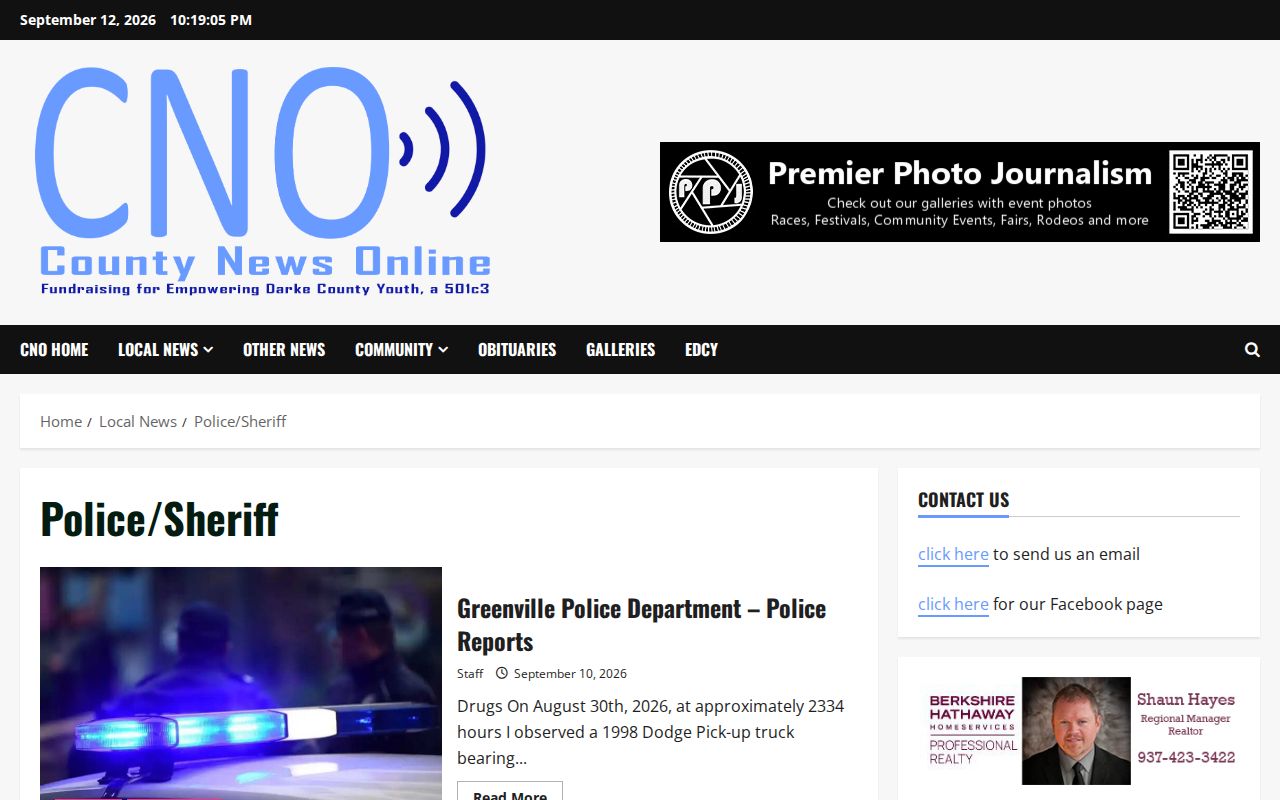
The archive repeats police and sheriff coverage regularly. Its story selection proves nothing about arrests that went uncovered. My County Link's Greenville blotter example uses dated entries with times, officers or call types, and narrative detail.
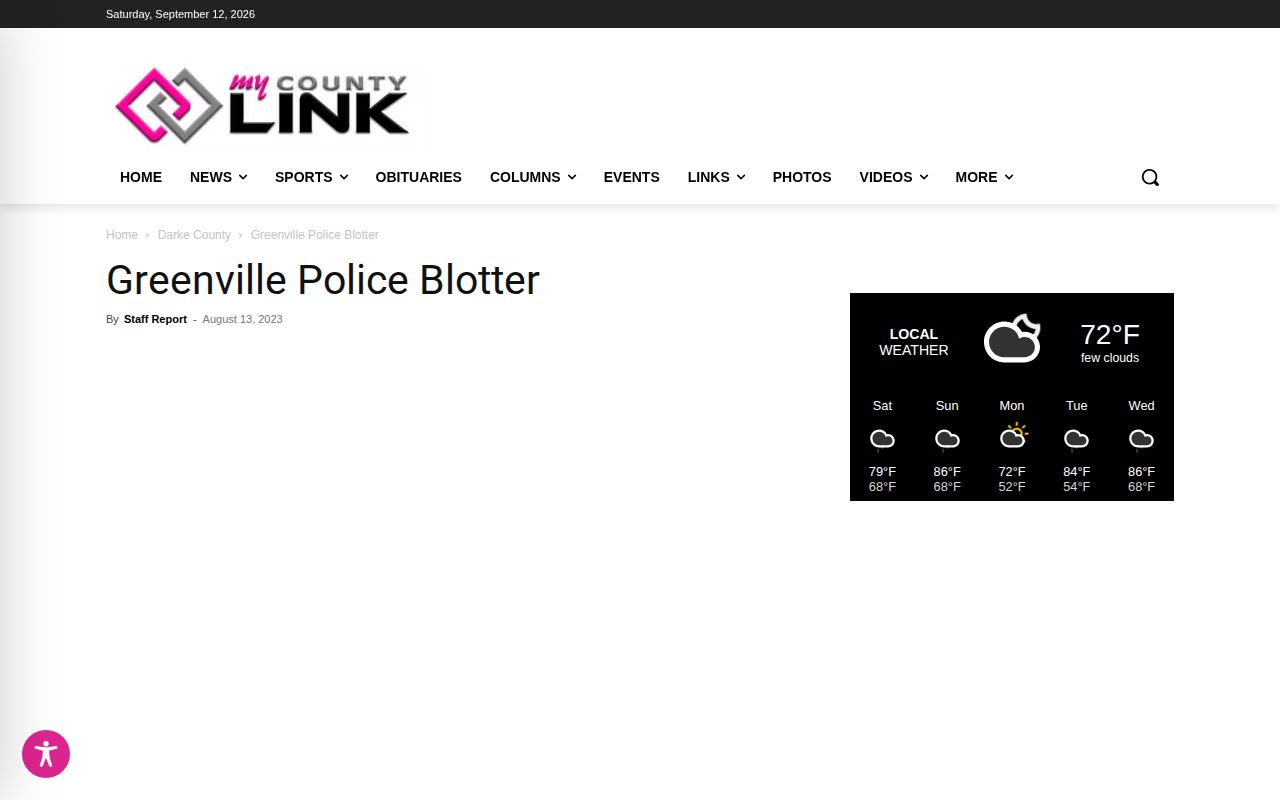
The example is a fine lesson in reading a narrative police log. It works as a sample, not a daily feed. A call entry may describe police work without any arrest.
Statistics Are Not an Arrest Archive
The Darke County Sheriff's Weekly Activity page is labeled statistical information and activity summaries. It shows agency workload in broad form. It names no booked person. It saves no booking photograph and states no final charge outcome.
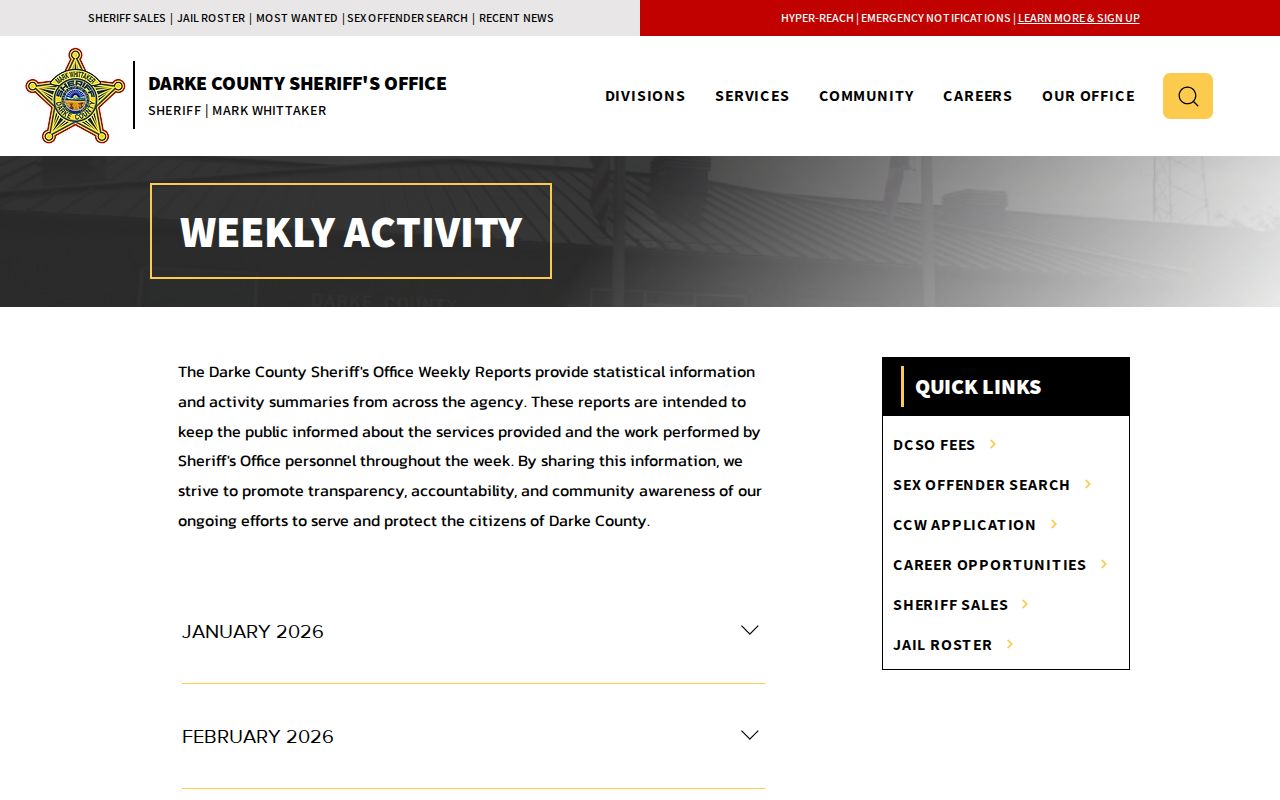
Those headings show why a summary should never be read as a named arrest log. Use it for context. Never use it to confirm one person's custody. Sheriff news works the same selective way. A release may highlight a joint operation while routine matters never appear. Neither silence nor a headline is a complete count.
Darke Booking Archives and Retention
How long does a Darke County booking file survive? The sheriff's office has published no booking-specific retention period. No approved schedule sets a destruction date either. A draft public-records policy leaves those calls to the custodian, who handles archiving and destruction alike. Ohio History Connection does offer local-government schedule forms and suggested sheriff categories, but statewide templates cannot stand in for a schedule Darke County actually approved.
Hunting an older named booking? Ask DCSO Records directly. When timing matters, also request the approved retention schedule or disposition record for that series. Include the person's full name, a tight date range, the likely arresting agency, and which items you want. The records page posts 937-547-4603, records@darkecountysheriff.org, weekday hours, and an estimated reply of two to three business days.
Third-party month or year archives work differently. The publisher decides what stays. An item can vanish without warning, and stale search results linger. None of that tells you whether the sheriff still holds the source booking record. Sealed or expunged material deserves special care too, and no unofficial copy should ever be used to reconstruct it.
Preserve the record boundary. A current roster entry, a police narrative, a booking file, and a court judgment each answer a different question, so keep them apart.